

What? How can rangefinder focusing be zoomed in if I can see the entire frame? One person I was conversing with in a forum was dead set on focusing with the EV1 at full frame, no zoom, just like using a rangefinder. That was when I had a revelation - the rangefinder actually focuses while zoomed into the image!
What does that mean? In truth, the focusing patch of the rangefinder system is a small part of the whole frame. Also, the patch size relative to the final photograph varies depending on the lens attached. For example, a 28mm lens covers the entire rangefinder window (or maybe a bit more depending on your edition). Yet a 90mm lens covers only a small portion of the rangefinder window, but the focusing patch never changes size.
Matching and aligning two images is the only way to focus through a rangefinder window. Focusing is only as good as your vision. Your ability to tell the difference between details of the two images aligning determines how well the image is focused at that point. In reality, the focusing patch shows such a small part of the overall image that your eye needs to zoom into the rangefinder to see the details necessary for focusing.
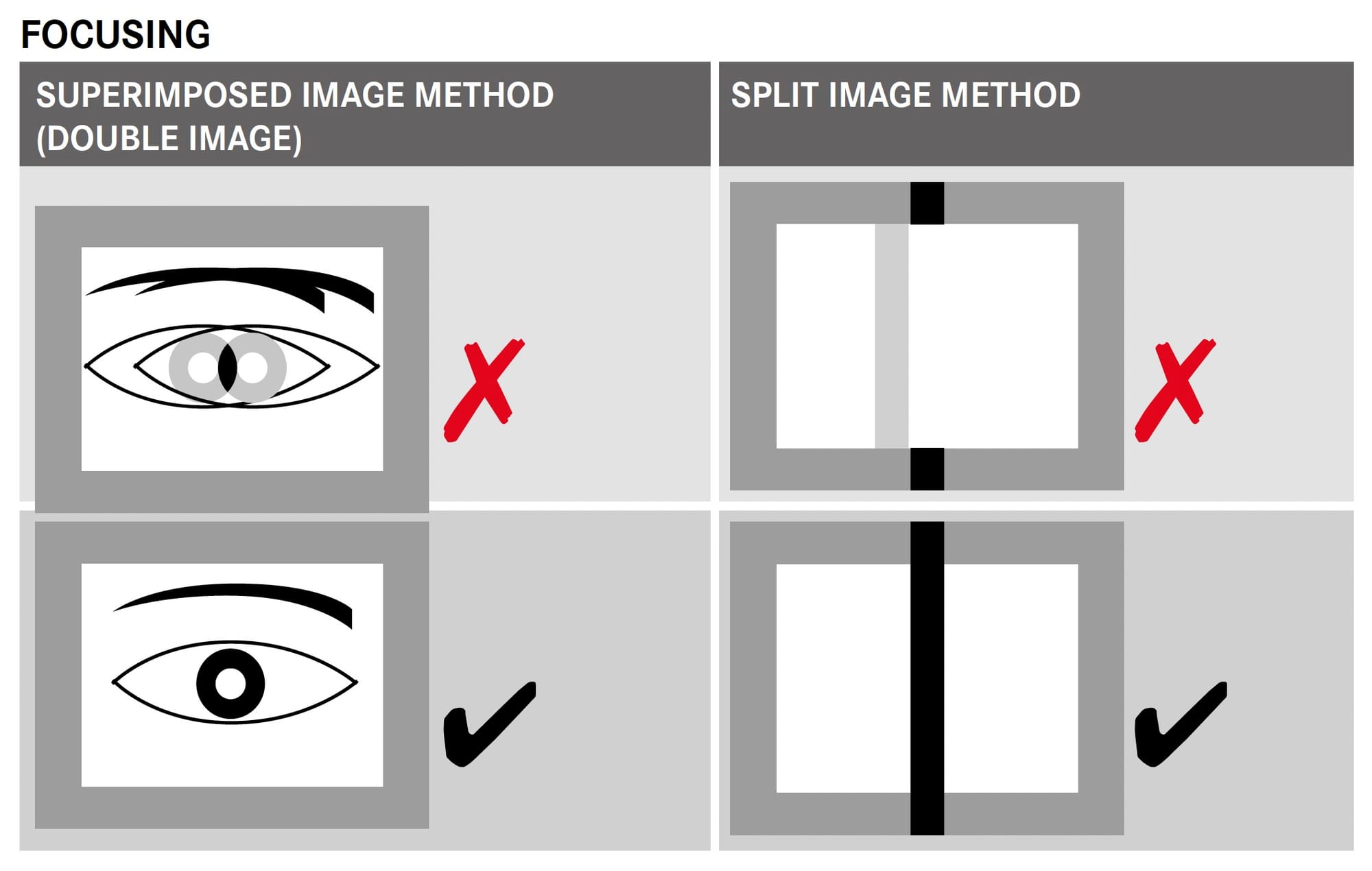
Clearly, with wide-angle lenses, you only need to be close for the image to be in focus. This is because, for any given aperture, the depth of field for a wide-angle lens is much deeper than a telephoto lens. With a longer lens, like 90mm, you can easily miss focus unless the image is almost perfectly aligned.
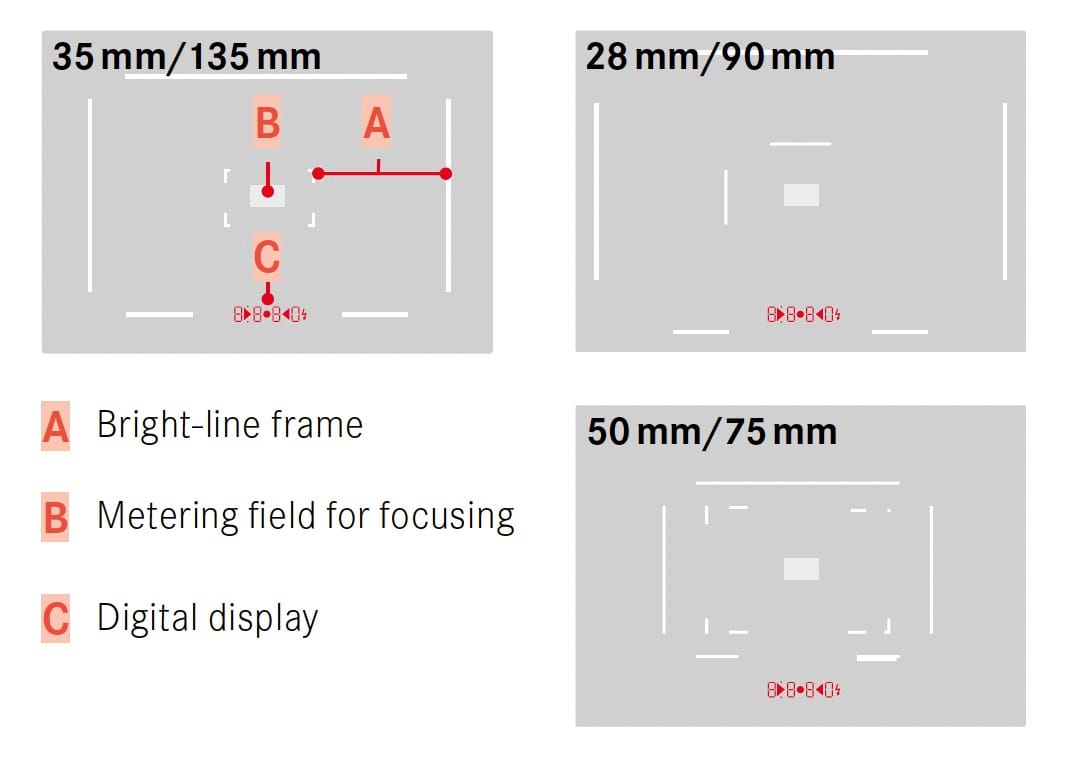
Leica has created magnifiers that screw onto the eyepiece that enlarge the view of the focusing patch, but at the cost of seeing less than the full frame. Ultimately, you need clear vision to see small details in the middle of the rangefinder window for spot-on focusing with longer lenses. With glasses on, this becomes harder, so Leica also provided diopter attachments. I use a -3.0 diopter correction on all my rangefinder M bodies and take off my glasses.
Relevance to the EV1
How is this relevant to the EV1? Early in my journey with the EV1, I talked about efficient focusing methods. I believe that setting the EV1 to automatic zooming is the single most efficient method to nail focus every time. You can re-read my assessment, which hasn’t changed. You can also read about my techniques for focusing for a deep DOF, where I use the middle-level zoom instead.
When you use "auto zoom" and start focusing a lens in any direction, the EV1 automatically zooms in so you can see fine details. At any time, in focus or not, tapping the shutter brings the EVF back to full frame. Pressing the shutter while zoomed in takes the image immediately.
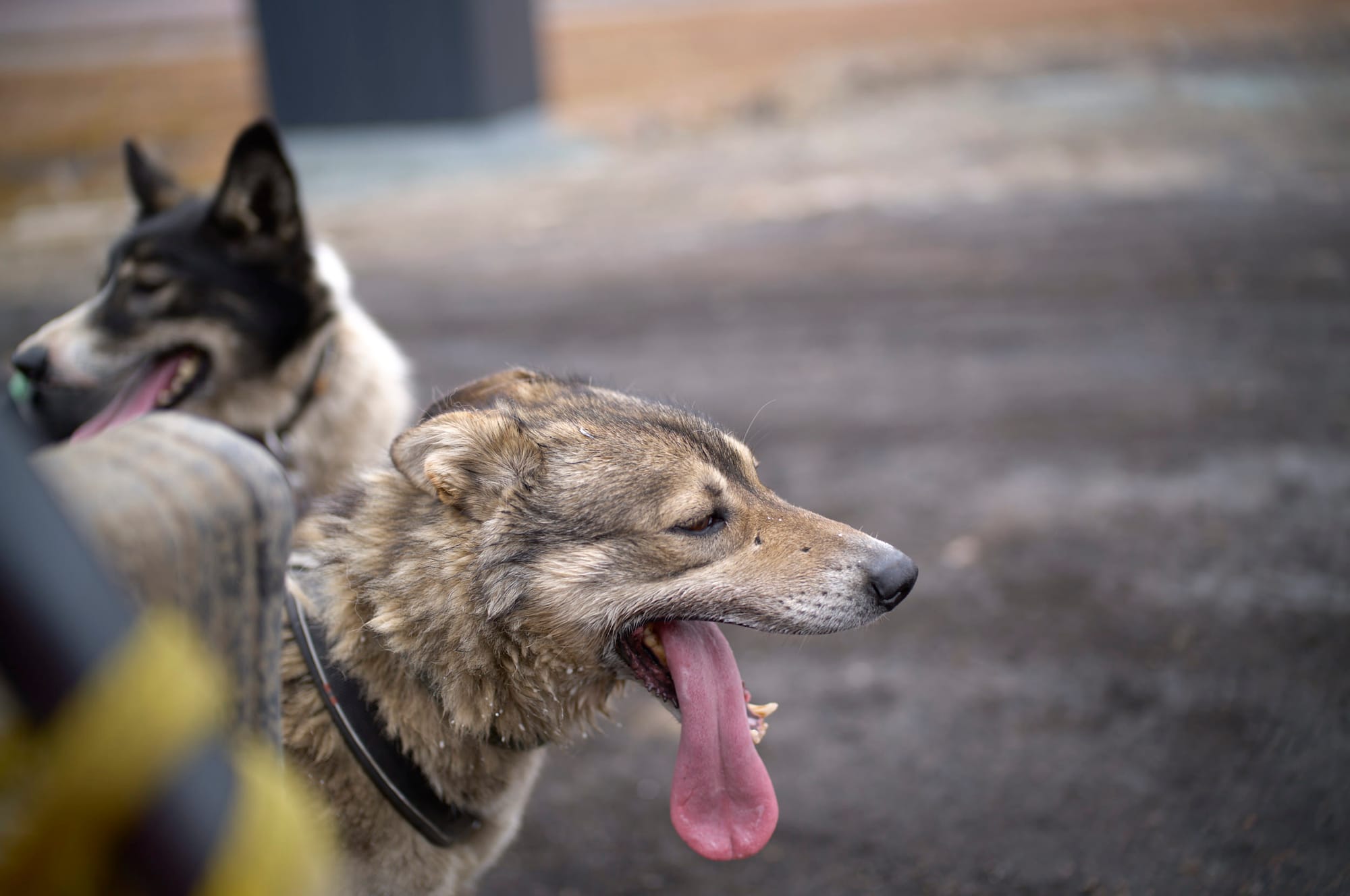
Imagine what the experience would be like if the rangefinder M’s could enlarge the focusing patch? Noctilux lenses could be focused easily. Long lenses like the APO 135mm could be focused easily. This is exactly what the EV1 provides.
Forest for the Trees
Some have suggested to me that you lose the ability to see the entire frame when zoomed in and focusing. I strongly disagree - if you use the Leica M bodies the way they were intended. We all have a dominant eye, and technique is everything in photography. Since the addition of diopter correction in both rangefinder windows and the EVF, using either eye is possible. Yet, using the proper eye is the key.
When focusing a rangefinder, the right eye must be used (pun intended)! The left eye is then uncovered by the camera and can see what is happening in the scene. Is someone getting ready to walk in? Is a bird in flight on the way? Using the left eye to focus makes the right eye stare at the middle of the camera body and miss the scene unfolding.
Focus vs. Pressing the Shutter
Again, I’ll compare taking the image with the EV1 alongside the rangefinder experience. Choosing when to press the shutter is irrelevant to the camera body used! If you are busy aligning the focusing patch in the rangefinder window, and you see the perfect image you have been waiting for, do you 1) keep focusing and miss the image or 2) press the shutter and risk being slightly out of focus?
That choice is yours, of course. I have opted to press the shutter more than once because I’d rather capture the image than miss it entirely. Does that mean I always get the shot? Sometimes focus is so poor it won’t work, or maybe I missed the exposure so much that it isn’t salvageable. But I tried, and sometimes it is wildly successful.
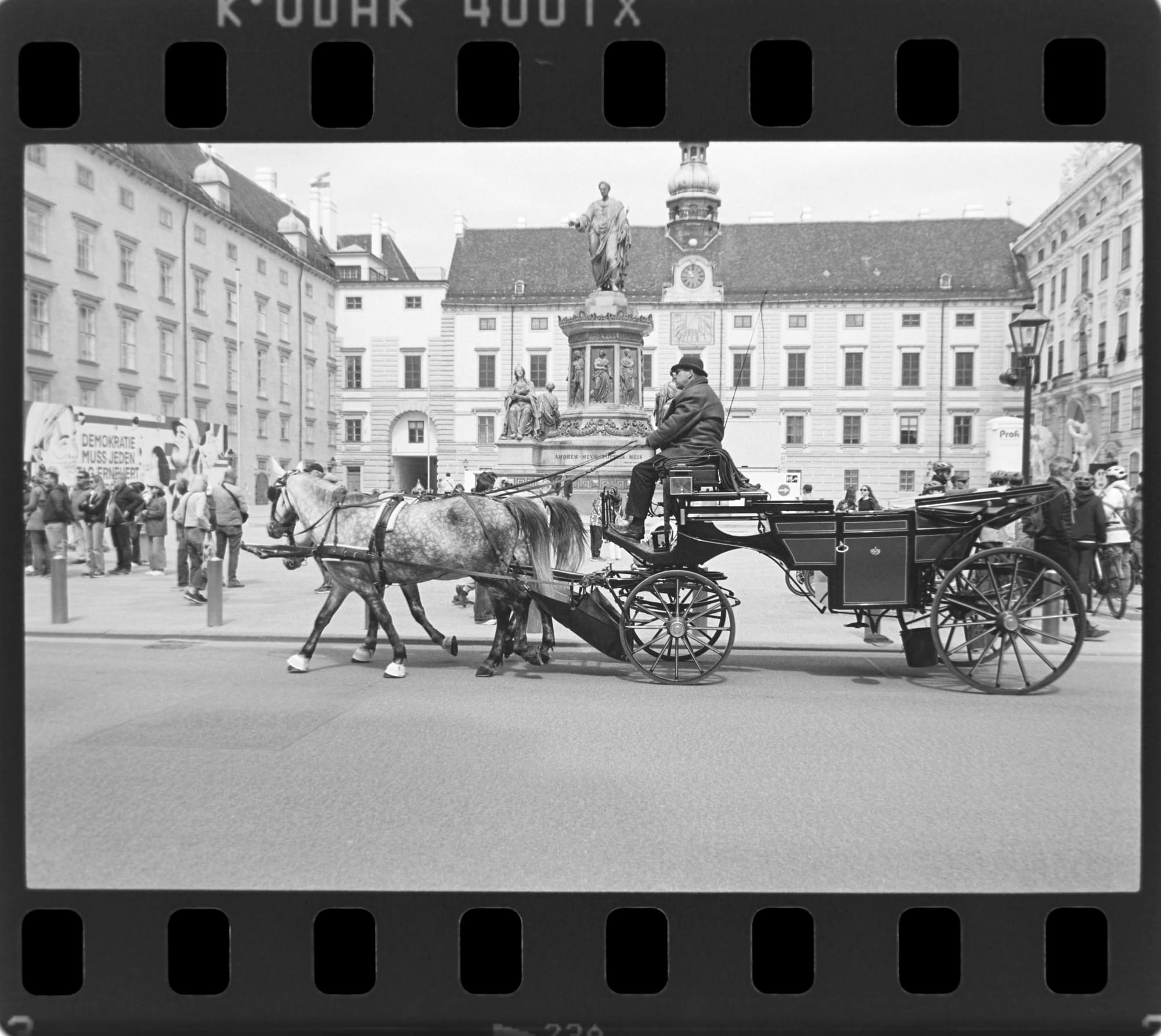
If I am focusing with the EV1, zoomed in, and the scene is aligned for a great image through my left eye, I press the shutter! If there is one lesson I have learned through years of photography, it is that I would rather have a poor shot than wish forever I had pressed the shutter. Here is an image that I made with the Leica MP film body using Kodak Tri-X 400. This carriage was coming from behind us, and I raised my camera and pressed the shutter without focusing or changing the exposure. I simply took the image. No one is really paying attention to this historic-looking carriage (Vienna, Austria). I love this photograph, even though it isn’t technically in perfect focus.
Conclusion
The rangefinder is a zoomed patch where the frame lines get bigger or smaller, demanding more precision as higher focal lengths are used, whereas the EV1 demands watching outside the viewfinder while focusing to avoid missing the scene changes. In either case, pressing the shutter is what awards us with an image. That hasn't changed since photography began.
I maintain that for shallow to mid-level depth of field, 100% auto zoom during focus allows very sharp results, while 50% auto zoom allows better deep depth-of-field focus. In all cases, you still have to press the shutter at the right moment.